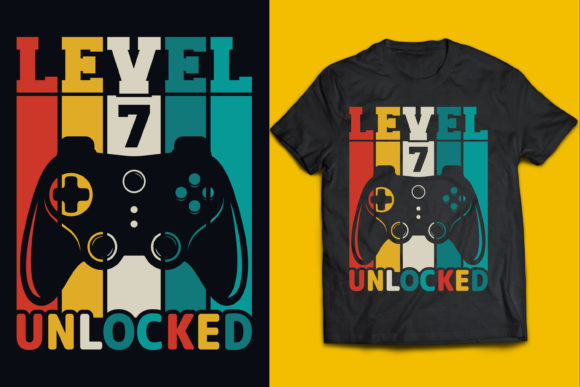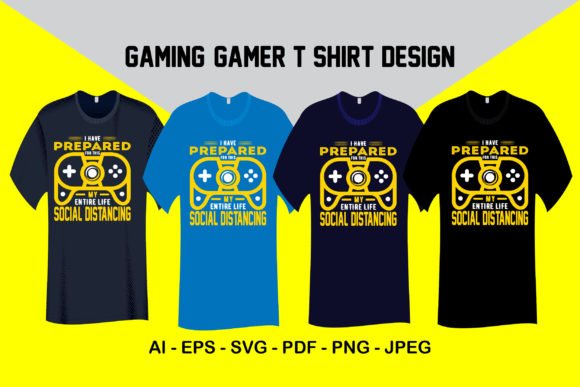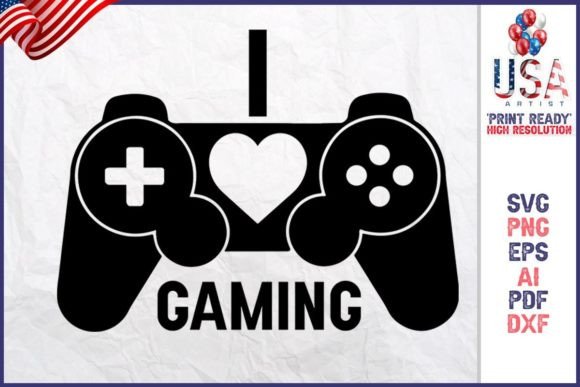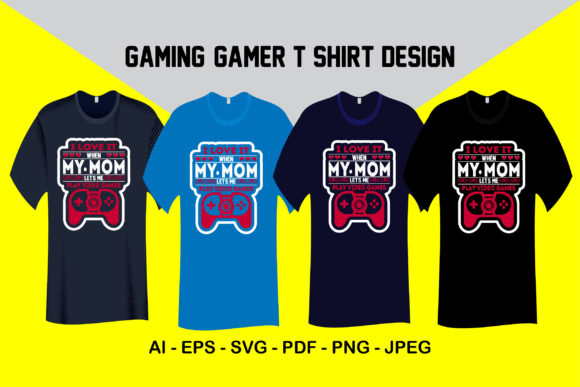
Gaming Gamer T-Shirt Design: Integrating a Ready-to-Print Asset Into Your Creative Workflow
For creators, entrepreneurs, and small business owners, the journey from concept to product is often the most critical phase. It involves sourcing or creating designs, ensuring technical compatibility, and managing production-ready files. A Gaming Gamer T-Shirt Design like the popular "I Love it when my mom lets me play video games" artwork represents more than just a graphic; it is a complete, packaged digital asset engineered for seamless integration into your operational process. Understanding where this fits and how to use it effectively can streamline projects, reduce overhead, and maintain quality control.
The Role of Pre-Made Designs in a Production Workflow
In a typical workflow for merchandise creation, the design phase demands significant resources. It involves conceptualization, illustration, vectorization, and file formatting for various print methods. By introducing a pre-made, high-quality design into this process, you effectively collapse several steps into a single acquisition. This Gaming Gamer T-Shirt Design arrives not as a single image, but as a suite of files: AI, EPS, SVG, PDF, JPEG, and PNG. Each format serves a specific function within different stages of your workflow. The AI and EPS files, for instance, are essential for professional editing in Adobe Illustrator, allowing for color changes, scaling, or minor customization before moving to the production stage. This pre-packaged approach eliminates the need for separate vectorization or resolution adjustments, tasks that often consume time and require specialized software skills.
File Suite Breakdown and Practical Application
The provided file package is designed for maximum compatibility across platforms and print techniques. Here is how each component interacts with common tools and methods:
- AI & EPS Files: These are the core editable vector files. Use them in Illustrator CS6 or later to alter colors, separate layers for complex sublimation, or integrate the design with other graphic elements for a composite piece. They ensure consistency and scalability without quality loss.
- SVG File: Useful for web-based design platforms or certain cutting machines. It offers a streamlined vector format that is widely supported.
- PDF File: Acts as a reliable, universal format for viewing, sharing with clients, or sending to some print services that accept PDF-based artwork.
- JPEG Files (4 Color Presentations): These are your preview and mockup assets. Use them in marketing materials, website listings, or social media posts to showcase the design in different colorways before production. They facilitate decision-making and customer communication.
- PNG File (4500×5400 Pixel): This high-resolution, transparent-background file is crucial for direct application onto digital mockups or for use in software that requires raster images at print-ready quality (300 dpi).
The files are compressed into one ZIP file, a standard practice for digital asset distribution. Extraction using tools like WinZIP, WinRAR, or your operating system's built-in utility is the first step in the implementation process, moving the assets from a delivery format to an accessible project folder.
Integration Into Specific Product Creation Processes
The utility of this Gaming Gamer T-Shirt Design extends across multiple product lines. The design is not locked to a single output. Its high-quality vector base makes it adaptable. Here is how it fits into the production workflow for different items:
- Sublimation: The process requires a vector or high-resolution raster image. The AI/EPS or PNG file can be directly used in sublimation software to print onto blanks. Color changeability in Illustrator is key here, allowing you to match the design to different substrate colors.
- T-Shirts, Hoodies, Tank Tops: These are the primary apparel applications. Print-on-demand services, screen printers, or DIY heat press setups all accept the provided file formats. The workflow involves selecting the appropriate file (often PNG or PDF for POD, AI/EPS for a screen printer's art department), uploading or supplying it, and proceeding with the physical production.
- Mugs, Pillows: For these items, the design might need resizing or repositioning within the editable vector files. The workflow includes opening the AI file, adjusting the artboard to the product's template, and then exporting a new PNG or PDF specific to that product's requirements.
- Women's Flowy Tank Top & Other Products: The same principle of adaptation applies. The design asset remains constant; you modify its application within your production software to fit the new garment's print area.
This adaptability underscores a key workflow efficiency: maintaining one master design asset that feeds numerous product lines ensures brand and design consistency while minimizing file management overhead.
Organizational and Quality Control Advantages
From an organizational perspective, acquiring a complete package simplifies asset management. Instead of storing multiple self-generated versions of a design for different purposes, you have a single, authoritative source package. When a new product idea emerges—say, adding baseball caps to your store—you return to the same ZIP file, extract the AI file, and adapt the design, ensuring the graphic quality remains intact. This promotes long-term usability and protects against the common problem of losing or corrupting source files over time.
Quality control is inherently built-in. The specifications—300 dpi, 4500×5400 pixels for the PNG, vector scalability—mean the design meets professional print standards from the outset. Integrating this into your workflow removes the need for a quality-check step on the design's technical merits. Your focus can shift to checking the color application on a specific mockup or the final printed product, rather than worrying about pixelation or blurry edges.
Workflow Example: Launching a New Online Store Item
Consider a practical scenario: you are a small business owner adding this gaming-themed shirt to your e-commerce store. Your workflow after purchase might look like this:
- Extraction & Organization: Download the ZIP file, extract it to your dedicated "Project Assets" folder. Create subfolders for "Source Vectors," "Marketing Images," and "Product-Specific Exports."
- Customization (if needed): Open the AI file in Illustrator. Change the text color to better match a new hoodie fabric you're sourcing. Save this as a new version file.
- Mockup Creation: Use the high-resolution PNG with its transparent background to place the design onto a digital T-shirt mockup using Photoshop or an online mockup tool. This creates the visual for your store listing.
- Platform Integration: Upload the required file (often PNG or JPEG for the visual, and sometimes a separate PDF for production) to your print-on-demand service provider's dashboard or to your screen printer.
- Marketing: Utilize the provided JPEG color presentations in your social media posts or email campaigns to showcase the design variations available.
This streamlined process, centered on a ready-to-print asset, bypasses the design creation, vectorization, and resolution optimization phases, allowing you to concentrate on customization, marketing, and sales.
Beyond Business: Personal and Gift Projects
The workflow integration is equally valid for personal use, hobbies, or gift creation. Perhaps you are creating custom shirts for a gaming group or a birthday present. The process remains similar but simplified: extract the file, choose the product (mug, pillow, shirt), and send the appropriate file to a custom print service. The Gaming Gamer T-Shirt Design serves as the instant creative core, removing the barrier of needing design skills or software. For educators or community organizers, it could be used to create merchandise for events or fundraisers, integrating into the planning and execution phase of those projects as a ready-made visual asset.
Ultimately, the value of a design package like this lies in its role as a plug-and-play component within a broader system. It interacts with your software (Illustrator, Photoshop, print-service dashboards), your methods (sublimation, screen printing, digital mockups), and your organizational habits. By providing a high-quality, multi-format starting point, it allows professionals and hobbyists alike to inject a proven, popular design into their workflow at the point of production, saving time, ensuring technical quality, and focusing energy on the business and creative execution that follows.