The Process-Driven Power of E-sports Gaming Jerseys Across Sports Uniforms
The term E-sports Gaming Jersey might evoke images of digital athletes competing in virtual arenas, but its design principles and production technology have become a cornerstone for creating high-performance, visually striking uniforms across a wide spectrum of physical sports. At its core, an E-sports Gaming Jersey represents a meticulously crafted garment designed for identity, comfort, and team cohesion. The process of creating these jerseys, particularly through vector design and sublimation printing on specialty fabrics, offers a repeatable, scalable workflow for sports teams looking to elevate their visual identity and functional gear.
Integrating Vector Design into the Uniform Creation Process
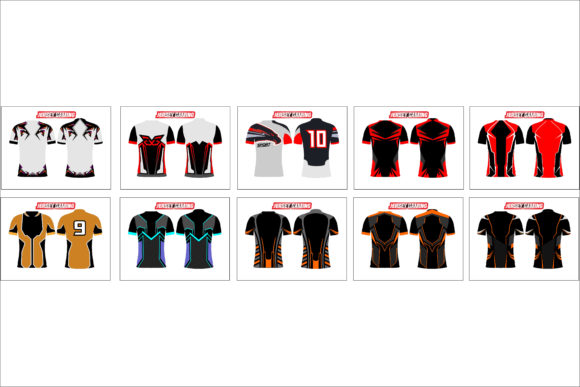
The starting point for any modern team jersey, whether for football or fishing, is a digital design file. Utilizing vector design—specifically files in formats like .EPS—is a critical preparatory step. This approach ensures that the core artwork is resolution-independent, allowing for flawless scaling from a small badge on a cycling jersey to a full-wrap graphic on a basketball uniform. For the team manager or club owner overseeing the project, this means the initial design asset can be locked in and used consistently across different garment types, promotional materials, and future iterations without quality degradation. The fact that a single project file can contain ten editable jersey designs, as mentioned, speaks directly to workflow efficiency. A designer can create a master theme with variations for different sports, all within the same environment, enabling rapid prototyping and cohesive brand application.
This design phase interacts directly with other decisions, such as fabric selection and printing method. The vector artwork must be prepared with an understanding of how it will translate onto fabric. Clean lines, defined color areas, and consideration for seam placements are all part of this integrative planning. It’s a stage where collaboration between the designer, the team leadership, and the printing provider is essential to avoid costly revisions later.
Sublimation Printing: The Execution Phase for Quality and Durability
Once the vector designs are finalized, the execution phase moves to printing. Sublimation printing on polyester fabrics is the dominant method for achieving the vibrant, all-over designs characteristic of E-sports Gaming Jerseys and modern sports uniforms. This process involves transferring dye directly into the fabric using heat, resulting in a permanent, breathable, and stretch-resistant graphic. For the practical implementer—the club secretary or uniform coordinator—understanding this method is key to quality control. Sublimation allows for the intricate, full-color designs envisioned in the vector files to be realized without the stiffness or cracking associated with traditional vinyl appliques.
The compatibility between the .EPS vector file and the sublimation process is seamless. The printer uses the vector artwork to create a precise digital transfer. This interaction underscores the importance of providing editable source files. A team might decide, mid-process, to change a primary color or adjust a logo's shape based on sponsor feedback. Having editable .EPS and .JPG files means these changes can be executed swiftly without restarting the entire design workflow, maintaining project momentum and consistency across all ordered units.
Practical Application Across Diverse Sports Teams
The utility of this E-sports Gaming Jersey-inspired process becomes clear when applied to specific team needs. The workflow from vector design to sublimated jersey is remarkably adaptable.
Football and Basketball Team Uniforms
For football and basketball, the requirements are for durability, moisture management, and bold visual identity on the field or court. Using sublimation, teams can incorporate complex patterns, gradient effects, and detailed sponsor logos directly into the jersey fabric. The process allows for creating a unified set including jerseys, shorts, and even matching accessories from the same design file, ensuring a professional, coordinated look. The organization of having ten base designs in one file enables a club to easily propose different kit options for home, away, and special matches.
Badminton and Cycling Apparel
Badminton and cycling jerseys prioritize lightweight, aerodynamic fabrics. Sublimation printing is ideal here as it adds negligible weight. A cycling team can design a jersey that integrates intricate team logos, sponsor decals, and even motivational graphics across the entire garment, all from the original vector artwork. The ability to change colors and shapes in the file is particularly useful for cycling teams who may have multiple squads (e.g., junior, senior, women's) requiring variations on a core design theme.
Fishing and Outdoor Activity Teams
Even for less traditional "team" sports like fishing, where groups or clubs want identifiable gear, this process applies. A fishing team jersey can be designed with UV-resistant sublimated dyes, incorporating logos, club names, and functional designs. The editable nature of the files means a local fishing club can easily update their jersey design year after year, perhaps adding a new tournament sponsor's logo or changing the accent color, without a complete redesign cost.
Workflow Integration and Long-Term Asset Management
Adopting this E-sports Gaming Jersey methodology is not just about producing a single set of uniforms. It’s about integrating a repeatable process into a team's operational routine. After the initial purchase and production, the provided editable files (.EPS and .JPG) become long-term organizational assets. They can be archived and reused for future kit cycles, shared with merchandise partners to create complementary products like caps or jackets, or adapted for social media graphics and website banners. This fosters brand consistency over seasons.
For the small business owner running a local sports club or the entrepreneur launching a brand, this process offers clear efficiency gains. Preparation involves selecting a reliable printing partner familiar with sublimation and vector file requirements. The usability of the final product is high—the jerseys are professional, comfortable, and durable. The entire workflow, from concept in a vector file to a physical sublimated jersey, is streamlined, reducing the time and uncertainty often associated with custom apparel production.
Key Implementation Tips for a Smooth Process
- Start with Clear Branding: Define your team's colors, logos, and core visual elements before the vector design begins. This upfront preparation prevents mid-process changes.
- Communicate with Your Printer Early: Discuss fabric options, seam placements, and design limitations with your sublimation printer during the design phase. Their practical input can shape the vector artwork for the best final result.
- Utilize the File Versatility: If you receive a package with ten designs, use them as a starting template. Customize one to perfection for your primary sport, and adapt others for secondary sports or fan merchandise, maximizing the value of the initial asset.
- Consider Future Use: When approving the final vector designs, think about how elements might be used separately. Could the main logo be extracted for a website? Could a color pattern be used for training gear? Planning for this asset reuse increases long-term efficiency.
Ultimately, the principles behind the E-sports Gaming Jersey—professional digital design married to advanced fabric printing—provide a robust, practical framework for creating sports uniforms. By focusing on the workflow from editable vector files to sublimated fabric, teams across football, basketball, badminton, cycling, and fishing can execute a uniform project that results in high-quality, identity-strengthening gear, while establishing a reusable process for seasons to come.